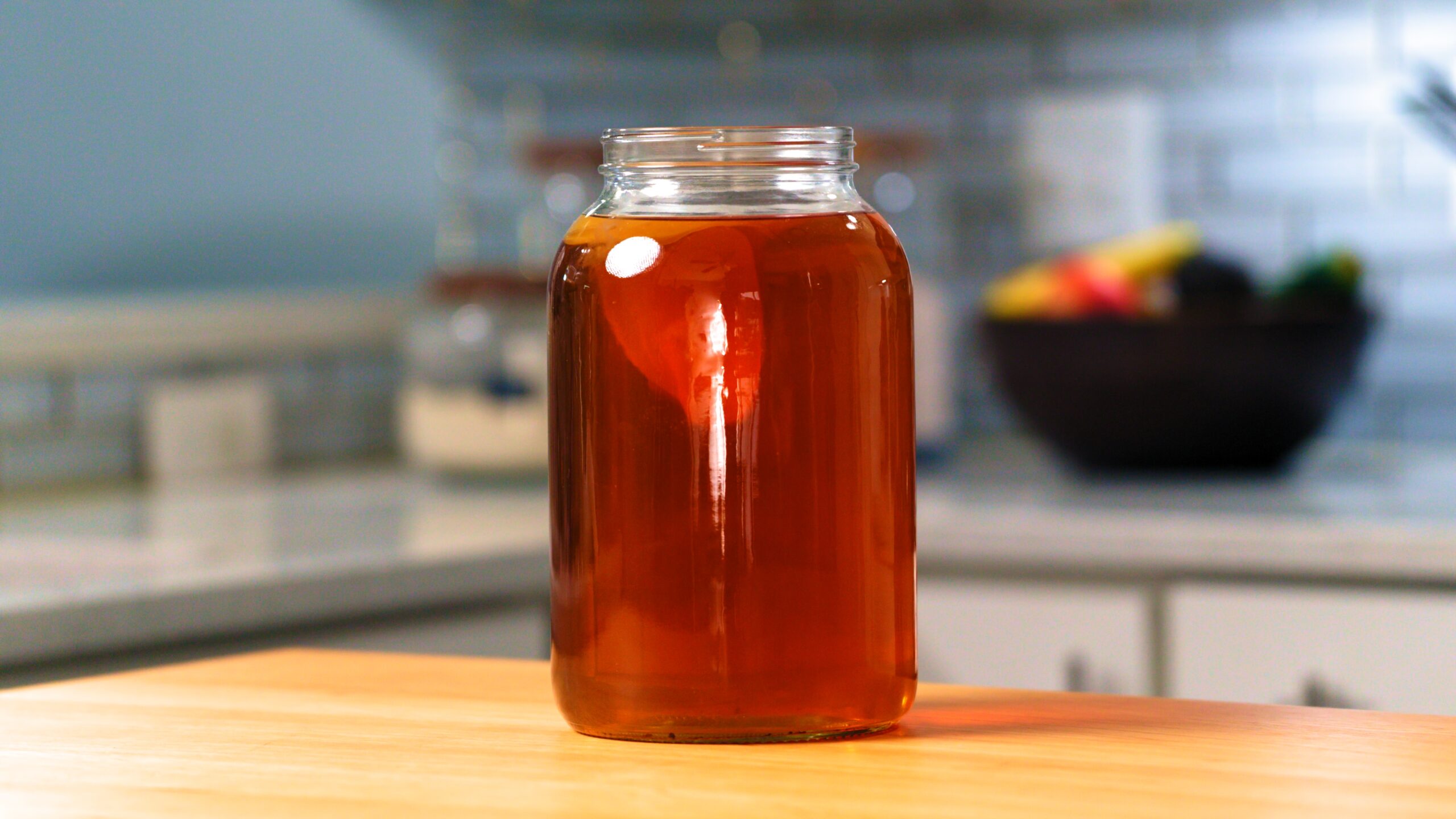
Servings: 1 gallon (3.8L)
*This content includes affiliate links. I may earn from qualifying purchases. Thanks for your support!
Equipment
- 1 rubber band
- tea strainers (if using loose-leaf tea)
- swing-top bottles (optional for 2nd fermentation)
Ingredients
- 14 cups filtered water
- 2 Tbsp loose-leaf black tea (or 8 bags black tea)
- 1 cup cane sugar
- 2 cups mature kombucha, reserved as a starter
- 1 kombucha SCOBY/pellicle
- sugar, fresh fruit, fruit juice, ginger, herbs, or other flavorings (optional for 2nd fermentation)
Instructions
Brew the tea
- Bring about 4 cups of water to a boil. Remove from heat, add the tea, and steep for about 15 minutes. Stir in the sugar while the tea is hot so it dissolves completely.
Fill the jar
- Pour the sweetened tea into a clean 1-gallon (3.8L) glass jar. Add enough filtered water to bring the total volume to about 14 cups, leaving room for the starter kombucha. IMPORTANT: Allow the tea to cool completely to room temperature before the next step.
Add the starter and SCOBY (pellicle)
- Pour in 2 cups of mature kombucha and gently place the SCOBY on top. It may float, sink, or sit sideways. Any of these are normal.
Ferment
- Cover the jar with a breathable cloth and secure it with a rubber band. Place somewhere out of direct sunlight, ideally at around 70–80°F (21–27°C).
Decide when it's ready
- Begin tasting after about 7 days using a clean utensil. If it's still very sweet, let it ferment longer. When it's pleasantly tangy with the level of sweetness you like, it's ready.
Refrigerate
- Reserve about 2 cups of kombucha and the SCOBY for your next batch. Bottle the rest and refrigerate, or continue with a second fermentation if you'd like carbonation and flavor.
Second Fermentation (Optional)
- Add fruit, juice, ginger, herbs, or another flavoring to airtight bottles. If your kombucha isn't already sweet enough (and you’re not adding something sweet like fruit), add about 1 teaspoon of sugar per 16-ounce bottle. Leave the bottles at room temperature for roughly 1–2 days, checking for carbonation, then refrigerate.
Video
Notes
-If you want to take a break from brewing, store the pellicle and about 2 cups of starter kombucha together in a covered jar in the refrigerator. They can remain there for weeks to months.
-Black tea is the most reliable choice, especially for a new or recently shipped SCOBY. Green, oolong, and white teas can also work.
-Cane sugar is an easy, reliable choice. The microbes use the sucrose during fermentation.
-Don’t drastically reduce the sugar. It's food for the bacteria and yeast and is necessary for a healthy fermentation.
-The SCOBY/pellicle may sink, float, or change position during fermentation. This is normal.
-Brown stringy material is usually yeast, and a new cream-colored pellicle may form on the surface.
-If you see fuzzy, hairy, or powdery mold, discard the entire batch.
-You don't have to do a second fermentation. Your kombucha will simply be less fizzy.
Nutrition values are approximate and may vary.
Have you tried this recipe?Comment below and tell us about it on Instagram! @wholeshenanigans