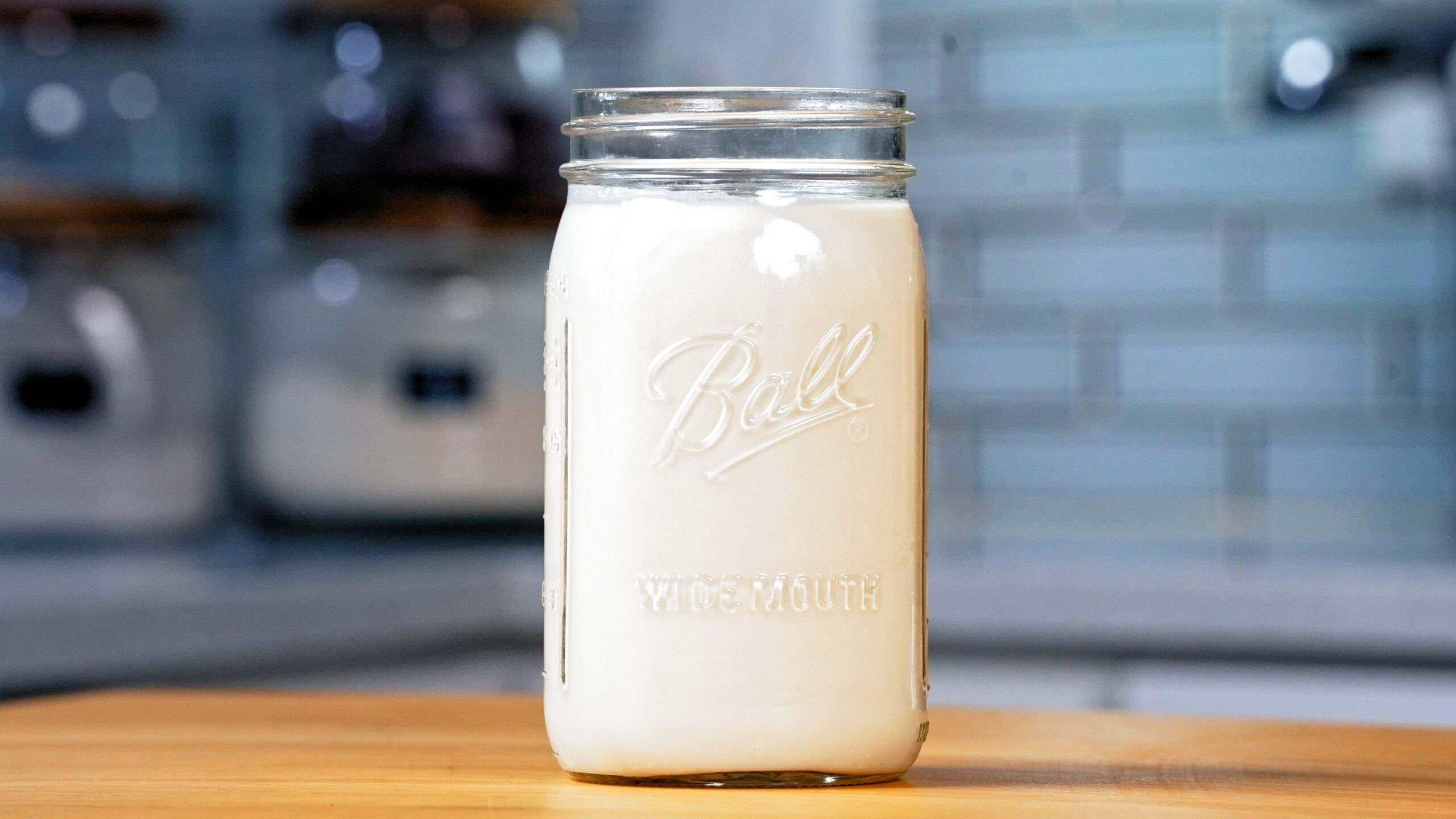
Servings: 2
Ingredients
- 1 Tbsp milk kefir grains
- 2 cups whole milk (raw, low-temp pasteurized, or pasteurized preferred)*
Instructions
Preparation
- Use a clean glass jar (sterilizing is optional).
- Add the kefir grains to the jar.
- Pour the milk over the grains. No need to be exact—kefir is very forgiving. Note that a larger volume of milk takes longer for the same amount of grains to ferment, while a smaller volume ferments more quickly.
- Cover with either a loose lid or a paper towel/cloth secured with a rubber band. The culture needs to release gas.
Fermentation
- Leave the jar on the counter to ferment at an optimal temperature of 68–75°F (20–24°C). Fermentation usually takes 24-48 hours, depending on temperature, grain quantity, and other factors. Fermentation will happen faster in warmer environments.
- Your kefir is ready when it is slightly thicker than milk, smells fresh but tangy, and is pleasantly tart.
Straining
- Pour the finished kefir through a fine mesh strainer into a bowl. You may have to stir for a few minutes to make sure all of the kefir strains through. The grains stay behind in the strainer to start a new batch.
Starting a New Batch
- Place the strained grains back in the fermenting jar. Add fresh milk. Repeat the process.
Storing the Grains
- Place the grains in a jar and cover with milk. Store in the refrigerator for up to a month. Change the milk if you see separation, as this means the grains need more food. Refresh with 1-2 room temperature batches when you return to use.
Video
Notes
-*Ultra-pasteurized milk doesn’t tend to ferment well. I have, however, had success with high-quality regenerative ultra-pasteurized milk. The milk I used was A2 milk.
-If your kefir separates into curds and whey, the grains have begun to run out of food. It’s still totally usable. Stir it back together, or even strain off the whey to make cheese.
-Wooden and stainless steel utensils are fine. Avoid reactive metals, such as aluminum, as they can harm your grains.
-You don’t need to rinse your jar every batch.
-Only rinse your grains if something truly went wrong.
-Kefir grains grow and multiply over time — you can share extras or freeze backups.
Nutrition
Calories: 146kcal | Carbohydrates: 11g | Protein: 8g | Fat: 8g | Saturated Fat: 5g | Polyunsaturated Fat: 0.3g | Monounsaturated Fat: 2g | Cholesterol: 29mg | Sodium: 93mg | Potassium: 366mg | Sugar: 12g | Vitamin A: 395IU | Calcium: 300mg
Nutrition values are approximate and may vary.
Have you tried this recipe?Comment below and tell us about it on Instagram! @wholeshenanigans